noahble.com
by Noah Smith
  • Photojournalism
  • Creative
  • News
  • Bio / Contact
  • Links

Calendar May 22, 2013 11:57

Car Buffs Gather To Celebrate Israel's Little-Known Auto Industry

Blog Blog

TEL AVIV - In the shadow of Nokia Arena, home of 5-time European basketball champion Maccabi Tel Aviv, dozens of vintage American, European, Asian, and Israeli cars were on display last Friday to commemorate the little-known Israeli car industry.

Despite a lack of publicity, the show drew hundreds of local admirers, in addition to members of the organizing group, The Five Club.

Between 1951 and 1981, Israeli Autocars Co. manufactured over 100,000 fiberglass-based cars, including the boxy "Susita" and the "Sabra" sports car. Additionally, Israeli factories assembled Studebakers and Fords, as well as Japanese Hino models, throughout the 1960s and 1970s.

"I find the whole concept of an Israeli car industry bizarre," said Club Member and Show MC Kobi Milo. "There is no logic to it, it was a pure enthusiasm of… Zionism during the early 50s that initiated it all, but now it's nice to look back and see."

Akin to the Dream Cruise, nostalgia held sway over many they looked at the cars, which included Israeli models as well as American classics such as a Buick Skylark, Chevy Corevette Stingray, Cadillac Fleetwood, GMC Sprint, Plymouth Special Deluxe, Ford Corsair, and Studebakers, amongst many others. Also present were a variety of Jeeps, military and not, post-war Mercedes Benz sedans, and old Israeli public transportation buses.

"Quite a lot of Israelis like American cars," said Mr. Milo. "When I was young in Israel, to have an American car, meant that you made it. They were bigger, more expensive, had some luxury stuff that, nowadays, you find in any Japanese econobox, but that in those days you could only find it in the Detroit cars."

"I adore American cars, said Amit Kanfi, from Rehovot, who was in attendance with his son and wearing a t-shirt which read " Oldsmobile Homecoming, Lansing 1994". "I love the length, and rear wheel drive, muscle engines, V8- I prefer it, of course!" he said.

Tel Aviv University film student Maya Katsir, from Tel Aviv, came because she likes old cars. "I like all different kinds, especially cars from the 1920s, but I've never seen a Susita. I've seen old cars before, but never Israeli ones," she said.

Though enthusiasm for classic American cars runs high in Israel, special challenges present themselves to classic car restorers. 

"The main difficulty when you try to restore cars in Israel is the availability of spare parts. Here, you have good people who know how to repair the mechanics, body, paint, but to locate parts, this is the main issue," said Mr. Milo. 

Import tariffs for American cars and parts in Israel run high, sometimes as much as 100%. There is also the problem of locating the parts and conducting business transactions from the opposite side of the world.

According to Ron Paz, spokesperson for The Five Club and Israeli government press liaison to the Asian, Latin American, African, and Economic press, the club imports 100-200 vintage cars per year from the United States.

"We prefer to bring them in from the U.S. West Coast, even if it's a European car," said Mr. Paz. They are better maintained and have less rust than from Europe because of the weather. Also, European families only had one car after World War II, where American families usually had two, so there is less wear."

Mr. Paz also said that Israelis  prefer to deal with Americans for other reasons as well. "Right now, there is a good dollar to shekel rate, plus people in the U.S. speak English, like most Israelis, and also Americans are very reliable," he said.

The Five Club, which takes it name from the fact that, in 1950's Israel, cars were issued license plates with only five digits, also serves another important purpose for its members. "The main goal is to represent owners vis-à-vis the authorities: the Ministry of Transport and customs," said Mr. Milo.

He explained that prior to the formation of the club, importing vintage cars was illegal, for safety reasons, and that the special status of collector cars did not exist until 1993, after successful lobbying efforts by the club. This designation allows members to receive a 75% discount on insurance.

Mr, Milo explained that the vintage cars represent less risk, since they are driven less frequently than everyday cars. In exchange for these discounts, the cars cannot be driven between 7 and 9AM on workdays, which in Israel are Sunday through Thursday or Friday midday.

Collectors in Israel face other restrictions as well. For instance, they are forbidden from upgrading the car from its original performance specifications.

Despite these drawbacks, the vintage car scene in Israel is growing, with many cross-country rallies, weekly meetings and a weekly cruise night, which takes place in Tel Aviv, Haifa, and even Jerusalem.

Aside from the social, political, and business aspects surrounding the show and club, Mr. Milo pointed out that, for many, the thrill emanates from old memories, which resurface in the face of a relic from the past. "People see these cars and their first reaction is, 'Hey, my father had this car, as a kid I used to ride in this car!" he said.


uploaded image

Locals look under the hood of an Israeli-manufactured "Susita" sedan.


uploaded image

A 50s-era Cadillac sits next to its contemporary Oldsmobile model


uploaded image

Israeli-made cars, produced from the 50s until the early 80s

 uploaded image

Locals inspect 70s-era Ford Mustangs  


uploaded image

A 1965 Israeli "Susita" with an Israel Post decal on its door


Article Links:

http://www.heritage.com/articles/2013/05/22/heritagewest/news/doc519bb0d5ad4e9310321720.txt

http://www.freenewspos.com/news/article/c/310945/home%20world/world-car-buffs-gather-to-celebrate-israel-39-s-little-known-auto-industry
 
http://www.thenewsherald.com/articles/2013/05/21/news/doc519baf0b3b25b285619973.txt
 
http://pressandguide.com/articles/2013/05/22/news/doc519bafec51c16292774846.txt
 
http://sourcenewspapers.com/articles/2013/05/21/news/doc519baf0324010483012968.txt


Posted by Noah Smith · May 22, 2013 11:57

Calendar May 13, 2013 11:39

Doc Update

Blog Blog

Filming has continued with some days back at the club, Yom HaZikaron (Memorial Day), and day on the base.

Editing continues...

 

uploaded image


Posted by Noah Smith · May 13, 2013 11:39

Calendar May 13, 2013 09:01

New Video! Karakal Hike

Blog Blog

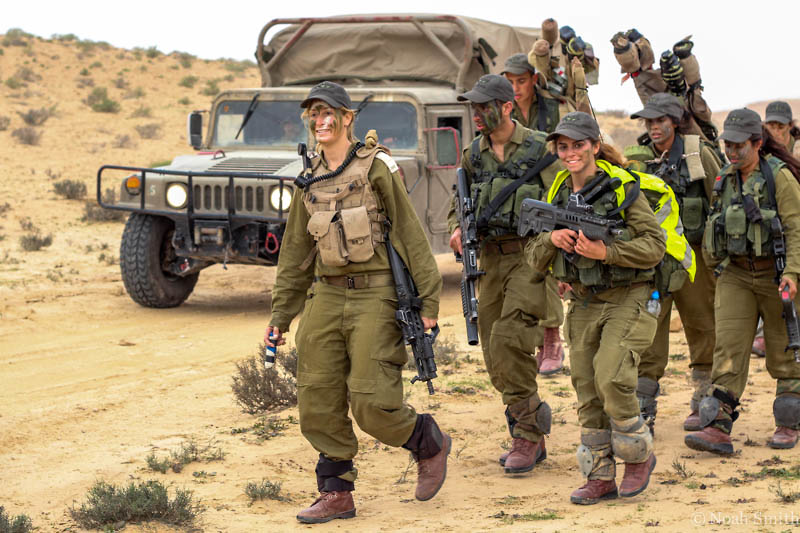
Recently went on a the final training march of a co-ed Israeli military unit, called Karakal:


Posted by Noah Smith · May 13, 2013 09:01

Calendar March 7, 2013 12:44

Shooting (Mostly) Completed

Blog Blog

Princial photography has (mostly) been comlpeted on the documentary! It really was an epic 10 days. Thank you to everyone who helped tell the story!

Now, there are a few interviews to get, as well as some b-roll, and then on to editing...

Check out the VildeHaya Productions Facebook page for all the updates and details!


www.facebook.com/vildehayaproductions


Posted by Noah Smith · March 7, 2013 12:44

Calendar March 3, 2013 12:20

Shooting Continues

Blog Blog

Shooting has continued for the VildeHaya-produced documentary set here in Israel. We are into Day 7 and are really excited about the footage we have been able to get and the stories that we will be able to share.

More info at: 

facebook.com/vildehayaproductions


Vildehaya.com coming soon!


Posted by Noah Smith · March 3, 2013 12:20

Calendar February 27, 2013 12:06

Days 2 & 3

Blog Blog

Days 2 & 3 of production have included trips to Intersurf (Israel's top surfboard maker/shop), the best halvah and candy shop in the Middle East, the best hummus in town, back to the club, and walking all around central Tel Aviv- waiting for those waves tomorrow!


uploaded image

Barak Avishay, Noah Smith, and Refael Peretz at the best Halvah & candy shop in the Middle East! (Credit: סתיו מסנר‎)


Posted by Noah Smith · February 27, 2013 12:06

Calendar February 25, 2013 13:50

Documentary Underway...

Blog Blog

Production began today on a documentary I am creating... prinicipal photography will continue throughout the next couple weeks around Tel Aviv as well as the north of Israel. More details to follow!

Posted by Noah Smith · February 25, 2013 13:50

Calendar February 20, 2013 06:21

Santa Barbara Dancer 'Comes Home' to Israel's Batsheva Dance Company

Blog Blog

TEL AVIV - Lilting reggae music filled the air as young children with their parents walked in to the performance room last Saturday afternoon. Large windows offered views of the red brick roofs in the neighborhood, which radiated the soft winter sunlight.  As the dancers walked in, the scene could well be set in Santa Barbara, instead of Tel Aviv, Israel.

Throughout their season, the internationally-acclaimed Israeli Batsheva Dance Company offers shows called "Kamuyot" which are created and performed with children as the target audience, to help them develop an early appreciation for dance, movement and art.

One of the dancers in the company had such a love ingrained within him, only it happened thousands of miles away, in Santa Barbara.

Shane Scopatz, 24, (San Marcos HS '07), developed his craft with Denise Rinaldi and Valerie Huston at the Santa Barbara Festival Ballet.

"It (SB Festival Ballet) was really good training for me… it gave me a lot of experience, at the Arlington theatre and other really big venues," said Scopatz. "It gave me a platform and ground to stand on. "

Scopatz credits Huston with having influenced him greatly. "She really helped me with my idea of going to college and what a career in dance would be like."

Despite currently working on the other side of the world, Scopatz maintains his connection to the SB dance scene.

"Whenever I'm home, I take Susan Alexander's class. It's a really pleasant thing to do. It's all these great Santa Barbara women and a lot of fun," he said.

Scopatz's path to Batsheva and Tel Aviv began during the summer after his junior year at UC-Irvine, where he was studying on a dance scholarship. He attended a program at the San Francisco Conservatory of Dance. There, he was introduced to the "Gaga" technique of Ohad Naharian, artistic director of Batsheva, recipient of the Israel Prize, and Knight of the Order of Arts and Letters (France).

"It was basically something I just fell in love with, like coming home in a way," he said.

Enamored with the technique, Scopatz traveled to Israel two times and enrolled in classes offered by the Batsheva Danc Company. On his second trip, he auditioned for a part in the company.

"While I was waiting for the audition, I ended up moving into a one bedroom apt in Tel Aviv with three girls, which was an amazing test of patience, but also really fun."

After the audition, he had to wait more than three months to hear if he got in, during which time he moved back to Santa Barbara.

"It was terrible. I was like biting my nails at home, thinking what's going happen with my life?"

Scopatz was offered a place in the Batsheva Ensemble, which is a group comprised of dancers aged 18-24 and is the group from which most of the main company dancers are selected.

In the few months that he has been in Israel, Scopatz has been able to develop professionally while also being able to take in the city.

"Gaga (the technique created by Naharin) is an improvisational-based technique and it's also somatic and about experimenting and researching with the body and mind at the same time," he explained.

"You go through all these exercises that have a link through imagery or sensations, so it's not like a ballet class where you stand at the bar and do four things this way and then turn. This is more research about the body and how I can move my body and flavors I can taste… it's that sort of heady research I really enjoy," he said,

"It's an avenue to learn more about myself and my body, so you build up all these tools so that you can perform his work."

Scopatz was clear in stating that he is in Tel Aviv for the work. Yet, this commitment to his craft has not prevented him from appreciating the unique setting in which he works.

"I like Tel Aviv, it's a really great place to live, it's by the sea. Almost nowhere else in the world will you be able to wake up and go to your dance studio, if you're lucky enough to be in a  company job, and, while you're warming up , look out your window and see old Jaffa and the Mediterranean Sea. It's a really beautiful place to work and I also like that it’s a relatively small city, so it doesn’t have the soul sucking aspect that New York does," he said.

Along with the benefits of working with Batsheva come some unique challenges as well. On a recent tour of the United Kingdom, Scopatz experienced protests at every show.

"They protested outside and then people would stand up during show and started yelling things. People who just wanted to see a dance cultural experience were getting shouted down by protestors," he said.

The ensemble was prepared for the disruptions and continued their performance in spite of the disruptions. Scopatz, like Batsheva, is not politically active and was confused as to why the protestors chose a dance company to direct their anger.

"The work we are doing has no comment on Israeli politics at all, it just a piece of art. I wonder if protestors know that we actually use Arabic music in some of the part of that piece," he said.

Because he has traveled to Israel previously, Scopatz had a sense of what it would be like to live there.

"Coming to Israel, you know there is a political rain cloud, but its not like I'm here to change something or be proactive regarding the situation."

It also helps that his family is behind him, vis-à-vis his decision.

"My family supports me a lot and they see how big of a career move this is, so if they are scared or nervous, they don't tell me because they want to support me.

Back at the Kamuyot performance, an eclectic range of music, from techno to reggae to surf rock to indie to punk, plays as the dancers exhibit a non-stop flow of energy and movement among the audience, who surround them in the circular seating configuration of the room. The dancers mix with the audience and even invite children to become a part of the show.

If, before the show, some of the children looked as if they were dragged to the performance, after only a few minutes, they were enchanted. In fact, the dancers were even able to elicit emotions from the kids; at one point laughter filled the room in response to a segment of the performance.

Perhaps the best indicator of the success of the show can be found in the fact that, upon its conclusion, children emptied onto the stage area and excitedly imitated the moves they had just seen.

As the language of movement appeals across ages and locations, while watching Scopatz's work with the ensemble, it would be impossible to know he is the only American in the show. The ensemble moves with a synchronized grace that naturally transcends nationality and other such identities.

Scopatz hopes to continue dancing for Batsheva in Israel, but is aware of the tenuous nature of a life as a performing artist. Nevertheless, he is not deterred.

"I will be movement artist for the rest of my life."

uploaded image

Both children and parents enjoyed the Batsheva Dance Company's Saturday afternoon performance


uploaded image

Shane Scopatz rehearses for an upcoming performance (Credit: Natalie Johnson)

Posted by Noah Smith · February 20, 2013 06:21

Calendar February 11, 2013 12:12

Tel Aviv Residents Fight City's Towing & Ticketing Practices

Blog Blog

TEL AVIV - Anyone who has ever had the misfortune of being tasked with finding a parking spot in Tel Aviv knows full well how existentially awful the experience can be.

There are many reasons for the dearth of spaces, one of which is that the current situation allows the city to profit off motorists who park illegally. As reported by the Associated Press, according to a 2009 report by the city's Enforcement Department, the lack of parking spaces contributes to the over 3,000 parking tickets that are issued per day, on average.

Still, it seems as if the steady revenue stream from parking tickets was not enough for the city. Last week, the Tel Aviv municipality came under fire following an incident in which a resident's car was towed away- after city workers painted the space she had parked in as handicapped-reserved. While her car was parked in the spot.

When the resident, Hila Ben-Baruch, called the municipal office to explain what happened, she was told she had to pay over $300. And was accused of lying. Ben-Baruch turned to social media and was able to obtain security video footage that vindicated her. In light of the indisputable video evidence, the city apologized and cancelled all fines against her.

Yet, Ben-Baurch's saga is only one of many that take place throughout the city everyday. Below are photos of a local man whose car was towed on central Tel Aviv's popular and chic Sheinkin Street.

The man saw it being towed and ran to confront the city workers in charge of the operation. This confrontation lasted close to an hour and, occurring as it did, on a weekday afternoon, lead to a traffic jam that ran the length of the street.

Before the situation ended, the police arrived, a large crowd gathered, a symphony of honking erupted, new friends were made amongst the stranded drivers, and the man whose car was being towed, apparently left without further recourse, decided to simply sit in front of the truck. Though he did capture the hearts and minds of the assembled crowd, his ploy did not work. His friends eventually talked him down and the car was towed away without further incident.


uploaded image

 The crowd was on the side of the man seated on the road. Though it could not be determined if they were really for him or just against the city.


uploaded image

The man's friends, and the police, try to reason with him as he sits in the space his car once occupied.


uploaded image

The police were called in, but the saga still continued for close to a half hour after they arrived.


Posted by Noah Smith · February 11, 2013 12:12

Calendar February 7, 2013 08:50

U-M Partners with Israel's Technion for Cardio Research

Blog Blog

HAIFA - The number one killer of both men and women in the United States is heart disease, according to the National Institute of Health. Researchers at the University of Michigan are working to change that. Partnering with colleagues at the Technion – Israel Institute of Technology, scientists are investigating new ways to attack the causes of heart disease.

Some of the research currently being undertaken includes using ultrasound energy to deliver a special type of gene so that an irregular heartbeat can be corrected. This project uses Israeli technology to deliver a gene that was discovered by researchers at U-M. There is also a program of drug discovery. Specifically, researchers are looking to discover new drugs out of Israeli organic compounds found in the Dead Sea, desert, and other areas in Israel.

The collaboration is co-led on the U-M side by David J. Pinsky, M.D., the Ruth Professor/Chief of Cardiovascular Medicine and Director at the U-M Cardiovascular Center, Alan Saltiel, PhD., the Mary Sue Coleman Professor and Director, U-M Life Sciences Institute, and on the Technion side by Michael Aviram, Ph.D. professor at the Technion and director of the Clinical Research Institute, Stat Laboratory and Lipid Research Laboratory. Faculty at the Weizmann institute will also be joining this leadership team.

Prof. Aviram, who has published 360 papers, written 34 chapters in books, and has over 10,000 Citations, is focused on discovering ways to combat "bad" cholesterol, LDL (low-density lipoprotein).

"Everyone knows that a high level of cholesterol is bad, but it is not only about quantity but also quality," said Aviram.

"When cholesterol is getting damaged by oxidation, which is like what happens when iron rusts, it will deposit in the arteries. So, you want anti-oxidation of cholesterol in the arteries," he said.

Avriam said that his work will likely result in a pill that will provide many nutrients found in the Mediterranean diet, notably compounds from pomegranate juice and red wine, in addition to enzymes known as paraoxinases. These break down previously oxidized cholesterol. This is the most innovative part of Aviram's work, the ability to repair cholesterol that has already been negatively impacted by oxidation.

Aviram who spent a sabbatical year at the University of Michigan and has also worked at Columbia, the University of Washington and the University of Illinois, says that U-M is special.

"They (the other universities) are all excellent, but in my specific field of cardiovascular research, U-M is probably the best for me. (U-M) is really excellent in the sense that they do everything that they can in order to make collaboration between different disciplines," he said.

"You can have good science, but if you don’t collaborate, you can't get too far, because you always need different ways of thinking, different ideologies. You can see this kind of collaboration at U-M in almost every department."

This institutional philosophy, early connections forged between U-M and Israeli researchers by Prof. Saltiel, and a substantial gift from the D. Dan and Betty Kahn Foundation, all contributed to the birth of the University of Michigan's partnership with the Technion.

"I believe we are the greatest public research intuition in the U.S. and there is an importance with having a great public institute partner with a great Israeli institution," said Pinsky, who is also an inventor with over a dozen patents.

"We have platforms in China, Brazil, Ghana, so why not also in Israel? We want to be broadly international and one of differences with Israel is that Israel brings technology to the table," he said.

Pinsky's research is focused on learning more about the ways in which blood vessels change their properties after normal blood flow is interrupted. This is important because these changes can lead to inflammation, blood clots, and swelling with fluid accumulation, all of which can be extremely dangerous, fatal conditions. Protective molecules in the blood vessel wall are being used in an attempt to limit damage related to these problems in conditions such as strokes, heart attacks, and others.

"The Technion develops wonderful technology, but they have different training," said Pinsky, noting that foreign universities usually have less time for teaching compared to U.S. universities.

The partnership program entails multiple aspects of collaboration. These include joint research projects, exchange of scientists for learning, research, and interaction, symposiums, and clinical educational exchanges.

"We took all these individual partnerships that existed among scientists and made them into one partnership, in order to fuse our efforts in the biomedical sciences. Beyond that, we thought we should take the top few research institutions in Israel and create one common platform to work with them at U-M," said Pinsky.

"In our program, the money is split equally between U-M and Technion researchers who join forces for one common project, one based here in Michigan and one based there in Israel. Each brings a unique angle," he said.

"Research is not a quick process, but it is a critical process. The immediate impact is the clinical training program. We just trained an Israeli in cardiology. Now, she will go back as faculty, teach students in Israel, and work on patients using skills she acquired at Michigan," he said.

"It is like when you throw a pebble in water, it ripples and moves on and on, that bit of training. People who don’t even come to to the University of Michigan, will be taught and will practice U-M methodology," Pinsky said.

One of the most popular parts of the program amongst participants has been the symposiums. The first one took place in 2011 in Ann Arbor and the Technion, based in Haifa, Israel, hosted the second one last December.

"We brought of a diverse group of people to Israel, different backgrounds, different nationalities. I asked for a show of hands of who had never been, and maybe 10 hands went up, and then 7 hands were raised when I asked who had only been once," said Pinsky.

"Uniformly everyone thought it was fantastic, they really liked it, people want to go back. Organic, independent partnerships have evolved, and the food was much better than I remembered," he said.

For Aviram's part, the food in Michigan also did not leave the best initial impression.

"I don’t see anything special about the food in Michigan, I think we have much better food in Israel," he said.

"I think our diet is much healthier than the American diet in general, but all over the States, they are starting to implement the diet and lifestyle of the Mediterranean diet," he said.

Still, Aviram enjoyed the Midwest values and pace of life he experienced.

"In Michigan, there are good people, very easy to get along with. I enjoyed my sabbatical and trip for the symposium very much. The symposiums are very high level scientific meetings and we've already seen that we can collaborate…because we share similar research topics." said Aviram.

The next symposium is schedule for this coming fall in Ann Arbor.

"Probably before it gets too cold," said Pinsky, who regrettably went to Ohio State University for medical school, though he pointed out that he has now been a Wolverine longer than he was a Buckeye.

Bringing things back to a serious note, Pinsky discussed the importance of research partnerships, such as the one he leads.

"Rambam Hospital (The hospital with which the Technion is affiliated) treats Arabs and Jews alike. Programs like this one validate science as apolitical, we're trying to improve human health. It's of huge value."


For more information about the partnership program, contact Prof. David Pinky at dpinksy@umich.edu.


Article Link:

http://www.heritage.com/articles/2013/01/31/ann_arbor_journal/news/doc510a89f8bca59743418478.txt


Posted by Noah Smith · February 7, 2013 08:50

Calendar February 6, 2013 07:53

After Israeli Election, Development Still Hot Issue

Blog Blog

JERUSALEM - With Israeli Prime Minsister Benjamin Netanyahu retaining power in last month's election, future construction in the E1 area will remain at the forefront of international controversy.  The most visible battle between Israelis and Palestinans in the past few months, the issue arose after the Palestinian bid for upgraded, “non-member observer state” status at the United Nations. Following this, PM Netanyahu announced plans to develop homes for Israeli citizens in an area referred to by the Israeli government as E1 ("East 1").

In the latest development, Palestinians and foreign activists erected a tent city called "Bab al-Shams" in the E1 area, which was dismantled by Israeli forces earlier this month.

The area, which is approximately five square miles in size, is controversial because it is situated in an undeveloped, yet strategically-important, area. E1 is situated between Jerusalem and the Israeli city of Ma'ale Adumim, , an Israeli town of about 40,000 people, to the east. If Israel were to build homes and infrastructure in E1, it would create a continuous link between Jerusalem and Ma'ale Adumim. Opposition groups state that such construction would weaken the potential for Palestinian control of East Jerusalem in a future peace agreement.

For most people around the world this issue is an abstract problem with no direct consequences. Yet, for long-time Jerusalem resident and educator Margie Tutnauer, from Detroit, the matter concerns, what amounts to, her backyard.

Tutnauer lives in the northern East Jerusalem neighborhood of French Hill, which is located next to Hebrew University and is built on land that Israeli took from Jordan in the 1967 war. Today, French Hill is an established and integral part of Jerusalem even if, down the hill and across the road from it, lies the Shuafat Refugee Camp.

"After 40 years in Jerusalem, I have seen so many changes and so much building," Tutnauer said. 

"There are many who would regard French Hill as a neighborhood of questionable legality. I definitely believe that both Jewish and Arab citizens have to learn to live together. If new neighborhoods are going to built in E-1, there should be Jewish building and Arab building," she said.

After a couple minutes of driving down a hill and through a tunnel, one emerges from the bustle of French Hill and Hebrew University into the mostly barren hills of E1. Another few minutes is all it takes to cross E1 and arrive at Ma'ale Adumim.


45 MINUTES AWAY FROM AMMAN, BY TANK

In 1975, Ma'ale Adumim was conceived as a bedroom community for workers in Jerusalem. New tract (mostly apartment) housing, freshly-paved roads, large shopping centers, and diverse kids running around evoke a sense of being in some random American suburb. They also speak to the intended permanence of the city.

Eli Raz, now working as a deputy director at the Moshe Castel Museum of Art, was a founding member of Ma'ale Adumim.

"One month after the 1967 war, I rode in a jeep with (General) Moshe Dayan and Rachel Yanait Ben-Zvi (author and wife of the second president of Israel, Yitzhak Ben-Zvi). That was the first time I saw this land and knew it would be perfect for a town, on top of this hill," he said.

Having just fought in the war, Raz assessed the location of the town in terms of topography in addition to proximity to Jerusalem- and Amman.

"We are only 45 minutes away from Amman, by tank," he said, reflecting the ideology that towns such as Ma'ale Adumim can act as a buffer against future attacks by helping establish more defensible borders.

Raz believes that construction in E1 is also necessary to help solve what he said was a housing shortage among Ma'ale Adumim residents and their families, forcing them to move to other satellites of Jeruslaem..

"There is no more available room in Ma'ale Adumim, our kids have to move to Modi'in," he said, referring to a town about 20 miles from Jerusalem.

Raz's beliefs are also driven by his lack of faith in a future peace settlement with the Palestinians.

"I am Iraqi, I know Arabs, I know what they think. Arabs can't make peace, it is holy land for them. They never will," he said.

Raz's distrust of the Palestinians also extends to the Israeli government's ability to adequately provide for Jews that they forcefully evacuate from their homes. This is born of the failure of the government to resettle many of the civilians it evicted from the Israeli settlement bloc of Gush Katif in Gaza back in 2005.

"There are still 600 families without housing from Gaza, so they will take 42,000 and find them housing?," he said.

"This is part of Jerusalem, I will never leave."


STATION ON A HILL

On an adjacent hill from Ma'ale Adumim, in the E1 area, is an Israeli police station. The building sits isolated among the undeveloped hills. Yet, the road leading up to the station is a three-lane highway, which seems to indicate a strong intention for future construction and development in the area.

The entrance to the station was fortified, akin to a military base, and entrance was limited to those on official business. A guard at the station, who asked that his name be withheld because he was not authorized to speak to the press, held a differing view of the land and situation.

"Me? I don't care about this land. If there will be peace, good, we can give it to them (the Palestinians)," he said

In front of the station, a few men smoked cigarettes while they milled about and enjoyed the open vistas afforded by the unimpeded hilltop location. As he waited for his friend to finish his business inside. Mohammad Sabah, of Ras Al-Amud, an East Jerusalem neighborhood, took a wider view of the E1 controversy.

"Before (Yasser) Arafat, Jews and Arabs were like one big family, we ate together… wherever Arafat went, he spoiled things, like here," he said.

"I want that there will be one state for everyone, not a Jewish state and not a Palestinian state. Just one state," he said, outlining a popular view amongst Palestinians, one that assumes a future Palestinian majority in such a state.

Driving back towards central Jerusalem, the mixed nature of the city was on full display. A group of teenage secular Jews stood on the light rail next to two elderly religious Muslims. An American tourist shopped at a local Christian vendor's booth, A Japanese tour group gathered outside the Old City walls. People of all faiths, of all races, sat in a local hummus restaurant, enjoying a food whose ingredients have been eaten by all peoples of this region since time immemorial.

"The local supermarket, bank and post office are places that we all meet and mingle and are treated equally," said Tutnauer.

"I would never want the city to be redivided."


uploaded image

View of E1 from Ma'ale Adumim looking towards Jerusalem. Hebrew University is located on the hills in the distance.


uploaded image

Ma'ale Adumim Founder Eli Raz shares his views on the history and importance of the land from his office in the Moshe Castel Museum of Art.


Article Links:

http://www.pressandguide.com/articles/2013/01/29/news/doc51084eb7f20e1694896867.txt

http://www.thenewsherald.com/articles/2013/02/03/news/doc51084b84171d3642899445.txt

http://www.theoaklandpress.com/articles/2013/01/29/news/doc51084158bb737023740756.txt

http://www.heritage.com/articles/2013/01/29/heritagewest/news/doc51084f266523f317898209.txt


Posted by Noah Smith · February 6, 2013 07:53

Calendar February 4, 2013 04:41

Skippy, Sex Shops, and Bagels: A Taste of NOLA in Israel

Blog Blog

TEL AVIV - It is sacrosanct that bagels, mandel bread, and corned beef are Jewish foods. Yet, in Israel, exactly none of them are considered particularly Jewish. Maybe it can be chalked  up to the intentional distancing that Israel's founders wanted to make from their Ashkenazi origins, but Israelis tend to be much more eager to go for Jachnun (a Yemenite pastry) on the weekend than a bagel and lox.

NOLA is a new American-style bakery in Tel Aviv that is attempting to not only bring American Jewish food to Israelis, but also homestyle American fare in general. According to Owner Talya Rasner, it has not always been so easy, especially when you are trying to be as authentic as possible.

"I knew what I wanted, so it actually made it harder, since I didn’t want to settle for less," said Owner Talya Rasner, who moved from New Orleans to Israel with her parents when she was eight years old.

Rasner's commitment to this ideal is evident in the bakery, both in terms of food and setting. The peanut butter cookies and pies are only made with Skippy peanut butter and the cheesecakes are only made with Philadelphia cream cheese.

The interior of the restaurant evokes a feel of the post-war era with its black, white and pastel tile motif, color design and furniture. Old cereal boxes on the shelves and the sweet sounds of Sam Cooke and his contemporaries add to the scene.

Having a background in design, Talya takes the details very seriously- and is willing to sacrifice for it.

While ingredients like Crisco and Skippy and Philly cream cheese are readily available in the U.S., it is much harder to find them in Israel.

While doing taste tests for their baked goods, Talya and her head pastry chef, Harriet Sternstein, now an award-winning pastry chef, but with a 20-year background in occupational therapy and clinical psychology, decided that that they needed Crisco for  pie crusts, locally-sourced substitutions simply would not work.

However, according to Talya, there was only one store selling retail Crisco. A sex shop. So, braving the quizzical look of the cashier, she went in and bought Crisco. A lot of Crisco. While paying, Talya said that she was buying the Crisco so as to bake with it, to which the cashier responded, "People bake with this?"

Other lengths to which the NOLA team goes to chase down ingredients include having to buy 15-30 kilos of Philadelphia cream cheese at a time. It can be a hassle, but it's worth it, says Sternstein.

"When someone comes in they know they're going to get what they are expecting," she said.

Maja Sherman, 24 (Jewish Academy, University of Michigan), an environmental policy analyst, went to NOLA after seeing that it billed itself as American bakery.

"It was intriguing to me to see if they were being truthful when they called themselves an 'American bakery', so I went to see," said Sherman jokingly.

"It's definitely an American bakery. I think they definitely have things that most Israeli menus don't have, baked goods are a big one, especially bagels. I'm happy they have biscuits. I haven't tried them yet, but I'm glad they have them since biscuits are a very southern food and it's called NOLA," she said,

"If someone asked with they could get American-style baked goods, I would definitely point them to NOLA."

Madeline Gysi, 23, who grew up in Los Angeles and is a first-year medical student, heard that NOLA served American food and was similarly curious.

"It was exciting, you can't always find those foods here. I was most excited to find bagels and lox. Also, pancakes which are not necessarily easy to find here," she said.

"When I first came to Israel, I was surprised that they didn't have normal Jewish deli food, you can't find bagels at the supermarket, you can't usually buy matzoh ball soup, even though people make it at home."

"Sometimes you find American food on menus here, but its usually disappointing. The owner knows how to make things authentically since she's American. It's a nice little American haven."

For Rasner, this sums up the goal of NOLA. The recipes are from her mother's cookbook and it is important to her to be faithful to them.

"I was going to stick to the concept of things being American," said Rasner.

In practice, this means rich, sugary Mississippi mud pies, cupcakes, and brownies. It also means that chocolate chip cookies that are crispy on the outside and chewy on the inside, something that is easy to take for granted, until you can't find cookies with such a texture. The same goes for birthday cake.

"It's a specific thing, any cake doesn’t work," says Rasner about the American-style birthday cake which is hard to find in Israel. "So, when people order it, we can make a real birthday cake for them."

NOLA's menu extends beyond sweet baked goods and includes American mainstays, which turn out to be very hard to find in Israel, like pancakes, macaroni and cheese, grilled cheese, and bagels.

These items have proven to be popular with the mix of Israeli and American customers that frequent NOLA. The bagels, in particular, have been such a hit that customers are now limited to two bagels per order.

"We can't stock enough of them," says Sternstein.

Of course, these new tastes have not been universally accepted in the city. Rasner relates a story about one customer who had an empty cupcake wrapper on her plate, but said that she did not like the topping, complaining that it was butter and sugar.

"So I said to her, I'm sorry you didn’t like it, but this is a classic vanilla cupcake, so yeah the occasional person doesn’t get it, but if I don’t make it that way, what's the point?" said Rasner.

With Rasner and Sternstein, it is clear that they are not simply trying to offer their guests a sampling of American food, but rather are trying to create a total, authentic experience. This effort has been rewarded with strong local and international media reviews and a regular customer base that has developed after only six months.

"Talya has the same passions that I do," says Sternstein.

"She has a design perspective and for me it's about the art and beauty and food, it feels good here, it feels right."


uploaded image

NOLA Owner Talya Rasner (right) talks shop


uploaded image

Cupcakes at NOLA are made from old family recipes, using American-sourced ingredients


Article Links:

http://www.pressandguide.com/articles/2013/02/12/news/doc511a894f52550003758978.txt

http://www.thenewsherald.com/articles/2013/02/12/news/doc511a8745dda51679214236.txt

http://www.heritage.com/articles/2013/02/12/heritagewest/news/doc511a889b06303604103961.txt

Posted by Noah Smith · February 4, 2013 04:41

Calendar January 30, 2013 16:15

Old Cuba, in Tel Aviv

Blog Blog

TEL AVIV - As salsa rhythms spill out onto the street, passersby are drawn in by the dim lighting set against the faded brick exterior, which displays a Cuban flag painted on its visage. Inside, glasses filled with sticks of sugar cane and mint line the bar. Spanish words buzz through the air as the staff confirms orders with one another.

At Alma de Cuba, a new Cuban restaurant in Tel Aviv, it is easy to forget you are in Israel, just steps away from the city's main military base and site of a bus bombing only a few weeks ago.

Any time a restaurant tries to reference a foreign culture or place, there is a risk of it falling into caricature and kitsch. Alma avoids this, largely due to its specificity in replicating a proper Cuban establishment.

"I'm Cuban, I knows how it feels, I know how it's supposed to work," says Manager Juan Gonsales, a Cuban expatriate who has lived in Tel Aviv for the past 12 years. He met his Israeli wife while giving a tobacco field tour in Cuba.

Since arriving, Gonsales knew that a Cuban joint would fare well in Tel Aviv.

"It has to work, I've traveled around Europe and every city has a Cuban place, sometimes more than one, people have curiosity about Cuban culture, Cuban food, Cuban drinks, it's something that calls attention of many people," he said.

In this way, Cuba and Israel both represent small nations that seem to draw more attention and interest than their geographical sizes and population numbers would suggest.

Asked why this might be the case, Gonsales suggested a couple possibilities.

"Cuba still looks like it is stuck in time, they have Mercedes and Audis and other cars, but people are missing that kind of architecture and culture, people miss the old days. They miss going to their neighbors and asking for some sugar and talking. People communicate less. Cuba reminds people what it used to be in old times," he said.

Gonsales went on to add that, "Cubans are very nice, it's very warm country, not just in terms of temperature, but people are very hospitable."

This hospitality is reflected in the service at Alma. The staff members, all from Latin countries, make a concerted effort to bring this aspect of Cuban culture to the Israelis and visitors who frequent the restaurant. Given the brusque nature of the service at many Israeli restaurants, the contrast is immediately apparent and adds to the transportive ambiance created by the music, food, and décor.


MAKING ISRAEL MORE INTERESTING

For Guy Shevach, a restaurateur and managing partner with Gonsales and Moti Maaravi, Alma represents more than just another new restaurant in the city.

"This about bringing some more culture to Tel Aviv, and making Israel more interesting, and open to other cultures," he said.

"Israel is very much an international country, a lot of people came from South America and Central America, people here value other cultures. We always look for the new thing, that we don’t know all the way. This is why you can find almost everything in Tel Aviv."

With Alma de Cuba, Shevach hopes to be a part of this movement and tradition.

"What I like best is to host people and entertain them and give them a unique experience that they cannot find everywhere. We have a lot of people coming here and we don’t allow them to go back to what they know, we make them confront something new," he said.

Shevach also pointed out that, beyond both being small countries with outsized world interest, Israel and Cuba share other commonalities as well.

"In a lot of ways we (Cubans and Israelis) are very much alike: temperament, love of life, hospitality. With food, there are connections too. As far as seasoning, Israeli food and Cuban food uses the same things, cumin, oregano. We like spicy food. Also, chicken, rice, beans..."

Alma de Cuba is also innovative in the city for how it serves its food.

"We don’t serve like a traditional restaurant, we serve more like a dining bar, that way you can eat during the night and be entertained. This is good for people who want to eat later, but also concentrate on other things, like the music, video displays, and live concerts, so it's different than a classic restaurant," said Shevach.

There is live Cuban and Latin music every Monday, performed by local bands, which echoes the music that is played at Alma's every other night of the week.

"We play Cuban music in this place, 90% is Cuban and the rest is Latin, stuff you'd hear in Cuba, salsa, lots of Reggaeton, which is all you hear in Cuba today," says Gonsales.

"It took me a few years to get used to it, my whole life all I heard was Cuban salsa, things like this, but people changed, influenced by what's going on in Puerto Rico, Miami," he said.

Alma presents an interesting scene as the evening wears on. Attracting a more sophisticated and slightly older clientele, owing to the complex menu and nature of the area amongst other factors. Nevertheless, bartenders and patrons routinely dance on the bar and generally get swept up in the upbeat, Latin atmosphere on display.

As the music plays downstairs, guests can go upstairs to humidor, the largest of its kind in Israel. Dark wood paneling, leather seating, and mood lighting give the room a character that somehow feels more intimate and appropriate for smoking fine Cuban cigars. In this room, it is easiest to feel completely removed from Israel and the Middle East.


CUBA-ISRAEL CONNECTIONS

Back downstairs, the authentic Cuban menu, under the watchful eye of Mr. Gonsales, sometimes blends the island's cuisine with local influences. An intriguing example of this is the pastilla, a Moroccan dish that has layers of both crispy and soft dough filled with meat, prepared ropa vieja-style, and a spicy honey sauce, accompanied by a tropical fruit-based salad.

The contrasts of salty, sweet and spicy, mixed with the layered textures of the dough, combine to create a flavorful and unique dish, truly born of Cuban and Middle Eastern traditions.

Another plate of note is the grilled lamb with a smoked chipotle sauce along and honey made from dates ("silan") with rice and black beans. The "mixed chips" consisting of fried plantains, bananas, and yucca served with a yogurt sauce is an excellent way to start, or end, the evening at Alma.

Outside, the bar evokes a neighborhood, laid-back vibe, which is enhanced by the wood picnic table next to it. A sugar cane juicer (whose product is so very highly recommended), brickwork, and bright colors, complete the setting.

Shevach has grown more attached to Cuba and its culture since he become involved in helping create Alma.  Perhaps one reason for this is the closeness of the two peoples and the window Cuba's history offers for Israelis.

"I started studying about Cuban culture and it made me think a lot about what Israel could have been if the communist or socialist vision would have happened in Israel... (instead) what happened in Tel Aviv, in the last 25 years, is that it became a very international city," Shevach said.

Shevach sees a connection between this shift and Israel's appeal to tourists, beyond all the religious sites in the country.

"Many people are coming here for cultural reasons and tourism and I consider it one of the best places to go to as tourist in the world," he said.

"We are an interesting place, very beautiful place, an interesting place to travel to and microcosmos of everything and people should try it. It sounds foreign and scary, but we live here and live here well," Shevach said.

 "And if someone didn’t come here before because there wasn't a Cuban bar, now they can come, we are ready for them."


uploaded image

Alma de Cuba specializes in authentic mojitos, which line the bar.


uploaded image

The Cuban flag adorns the wall of the outdoor eating area


Posted by Noah Smith · January 30, 2013 16:15

Calendar January 24, 2013 03:48

NY Rabbi Hopes to Reform Israeli Society

Blog Blog

(JANUARY 22, 2013)

TEL AVIV - When Israelis go to the polls today, people around the world will be watching with anticipation. Rabbi Ariel Konstantyn, from Long Island, will be waiting to see if he has a new job, as a member of the Knesset, working to reform the very nature of the Jewish state.

Konstantyn, 37, from Long Island and currently rabbi of the Tel Aviv International Synagogue, is eighth on the Am Shalem list. If the Am Shalem party receives at least eight percent of fthe popular vote, Konstantyn will enter the Knesset. According to the latest polling data from 10 major media domestic outlets, including Channel 2, Haaretz, Israel Hayom, and Yedioth Ahronoth, Am Shalem is expected to receive between 0-2 seats in the Knesset.

Am Shalem ("complete nation"), named after its founding member, Rabbi Haim Amsalem, a Knesset member who was elected as part of the Shas ticket but has since gone independent, has gained attention during this selection cycle as a result of his calls for Haredim to work and serve in the military.

In Israel, members of Haredi communities, like Israeli-Arabs, are exempt from compulsory military service, Additionally, Haredi men who study full-time in Yeshivot receive stipends from the government. These amount to around NIS 1,000 ($267) a month per person. In 2010, about 13,000 yeshiva students received this stipend, at a cost of NIS 135 million ($36 million).

This policy is very controversial in many sectors of Israeli society. However, implementing changes, as was attempted earlier this year by the Netanyahu-led government, is difficult due to the power of far-right and religious parites, such as Shas.

Shas is a party that was created to represent the interests of religious Jews of Sephardic and Eastern dissent. Many of its members come from socio-economically disadvantaged sectors of society. They currently hold 10 seats in the Knesset and are predicted to receive between 10-12 seats in the upcoming election.

Shas has often joined ruling coalitions, providing the necessary mandates to form a majority ruling coalition. In exchange for this, they have been able to secure valuable benefits for its members of the Knesset, in the form of ministerial and leadership positions. Shas has also been successful in securing funding for social programs provided to its constituents, including for schools, which they run. Overall, the party has historically been able to exert strong influence in areas such as draft exemptions, stipends, and the application of religious law.

It was in this context that Rabbi Amsalem broke from Shas about a year ago and created his Am Shalem party.


HAREIDIM IN THE WORKFORCE

"Shas is enabling poverty," said Konstantyn flatly.

Though such a causal relationship is hard to establish, it is clear that many of Shas' main constituents are not benefiting from its work. According to the Organisation for Economic Co-operation and Development (OECD), 60 percent of Israeli Haredim live in poverty.

"Am Shalem doesn’t believe in endless Kollel study without working. If you're going to work in the religious field, then work! Serve the community. If you're not, work in some other field and earn yourself a livelihood along with Torah study," said Konstantyn.

Quoting from Ethics of the Fathers, the Rambam, and the Talmud, sometimes in one sentence, Konstantyn contextualized the current situation in Israel.

"Never in history has there ever been a time when the masses are studying Torah and not working, willfully unemployed," he said.

Adding to his point, Konstantyn explained that most religious sects in Israel, whose adherents do not work, are based in other places throughout the world, where adherents work in many fields.

For Konstantyn, this is issue is one of economics as well as religious obligations.

"What happens if they enter the workforce? Then they start working in jobs, producing revenue for economy versus draining it. Rather than the state paying out, they're paying in. That floods the economy with new jobs and new money, which can do what? Which can do social welfare, smaller class sizes, longer days. Now they get out at 1:30, they have 40 kids in a class. Also, we can lower or eliminate the V.A.T. (value added tax) on essentials, bread, milk, eggs. It's the same on the rich as on the poor. It's a horrible tax," he said.

To be clear, however, Konstantyn and Am Shalem are not keen to do away with professional Torah study and subsidies completely.

"We will always believe in an elite who study Torah, it's the spiritual engine of the Jewish people, but it’s a small percentage, I can't give you a number, but a small percentage. But like students who do Ph.D'.s and fellowships, that’s the best parallel, so it’s a small number. So it should continue. The masses should serve and go into the workforce," he said.


RISKING HIS LIFE

According to the latest OECD and Israeli Central Bureau of Statistics figures, the subsidies amount to a very small percentage of Israeli annual public expenditures. For 2011, they only represent .0004 percent of the budget. Tertiary education spending, outside of the religious studies, is about $8.2 billon, or close to 11 percent of the budget.

Konstantyn explains that Am Shalem's platform is grounded in religious tradition.

"We want to enable people. According to Maimonides the highest form of charity is to give someone a job, to enable them, empower them, not to give them social benefits, because they can't take care of themselves."

Many of the charges that Konstantyn leveled at Shas are the same as those espoused by many secular Israelis, who feel that they are being asked to foot the bill to pay for those who do not want to work. The price that Rabbi Amsalem has paid for holding similar views has been high.

"Rabbi Amsalem (is) risking his own life, putting out what he believes. He's gotten death threats, his family was put into excommunication, he can't go into synagogues. People don’t talk to his family at the supermarket," said Konstantyn.

This situation speaks to the high stakes involved in this election. In Israel, unlike other Western democracies, certain aspects of life fall under the exclusive jurisdiction of the religious court system. Notably, these include marriage, divorce, and religious conversion. The Muslim, Christian, and Druze communities have similar courts for their adherents.

Currently, Shas exerts heavy influence over these courts, which are run by the Ministry of Religious Services. The minister is currently Ya'akov Margi, a member of Shas. Secular Israelis have long expressed opposition to the courts, both in word and deed. Twelve percent of all Israelis who got married (47,000 people) from 2000-2005 did so abroad, according to the Central Bureau of Statistics. Doing this allows citizens to sidestep the religious courts.

"Am Shalem means a complete nation, a full nation, when there is Shalom, there is wholeness, there's no fracture," said Konstantyn.

"One of the goals of Am Shalem is to heal the fractures of groups in Israel. Everyone's got their little group, their box and they don’t look out. Am Shalem wants to break down those boxes and say 'We're one people, one nation. We have differences in observance, background, but we're one people'."

Konstanyn offered a general outline of the steps Am Shalem would take to reform the process, but did not commit to specifics in this regard.

"We're open to having a broader view, we need to address the needs of our citizens," he said.

Asked if these needs are being addressed, he issued a flat "no" and explained why. 

"Now it's an extremist Judaism…. we need a more compassionate conversion process, welcome them (converts), which will then solve a lot of issues of marriage," he said, referring to the fact that interfaith marriages are not performed or recognized by the religious courts.

"Moderate Judaism looks at the big picture, that Halakah has a wide range of opinions… there are a range of ways to solve peoples' issues and deal with modern questions. A good Halahkaic decision maker will make a decision based on who is asking the questions and what their specific circumstances are."


RELIGION, CULTURE, AND COERCION

An overarching issue in this discussion is that of religious coercion, which exists in Israel in the form of these religious courts, but also in ways such as stopping bus service during the Sabbath.

"We don't have to hit the citizens on the head with religious coercion. There is no (Israeli) law that you can't drive on Yom Kippur (Day of Atonement), yet nobody does. It is done by will, not by force. We are not Iran, we don’t cut off people's hands for stealing or put them to death for violating Shabbat which would be the biblical law," he said.

"What we'd like to have is a Jewish culture. In France, no one would say 'You're forcing French culture on me' because, well it's France, live somewhere else. We respect the right of the minority, everyone can have freedoms and expressions, but the dominant culture is determined by the country. No one would say France can't be French, so no one should be able to say to Israel you can't be Jewish. What does it mean 'Jewish'? That’s a fine line and something that should be worked out with dialogue, with religious and secular."

"And can there be a 'Jewish democracy'? Yes, but it will always be challenging, you will always have issues of church and state, or this case, synagogue and state," he said.

While promising reforms, Am Shalem is fully behind the idea of religion entering the public sphere.

"Is Israel a Jewish state or a state of Jews? If it’s a state of Jews and we want to be like all other nations, but happen to have a Jewish majority and if, God-forbid something should happen, we could protect ourselves, that’s one approach," he said.

"The other approach is that the state itself is Jewish in nature and culture, in content, in ideology, in values, in traditions, holidays, the calendar. In this case the Jewishness colors the identity of the state, that’s where Am Shalem stands."


A COMMUNITY RABBI

While issuing such serious policy declarations, Konstantyn maintains the enthusiastic demeanor of an engaged rabbi, someone who really believes in what he saying. Despite the facility and ease with which Konstantyn moves between biblical commentators and the latest government statistics, when he moved to Israel seven years ago, Konstantyn had no intention of getting involved with politics. He came to work as a rabbi.

Yet, Rabbi Amsalem invited him to get involved with the party after learning about his work at the Tel Aviv International Synagogue. After learning more about the party, Konstantyn discovered it would be a perfect fit. Even as a self-described religious nationalist, he found his views represented by Am Shalem. He was appointed to his position on the party's candidate list by the party's leadership.

"Politics always interested me growing up, but its not something I thought I would actually get involved in, I was very much on a rabbinic track, I still am, but the rabbinate is not seen as a profession in Israel like it is in the US, we need a community rabbi here," he said.

Connecting his personal experience back to his political beliefs, Konstantyn outlined the benefits of having a community rabbi, as well how he thinks religious study should be utilized.

"There are a lot of things that go into being a rabbi, you're doing multiple professions at once, a teacher, congregational leader, fundraiser, program director, publicity director, overseeing renovations, a couples counselor, I'm not a licensed couples counselor but people turn to me who need help and advisory support, when I feel its beyond I refer on, but that’s something that has turned into a profession. Weddings, Bar Mitzvahs, funerals, these things come with a profession and people who sit in Yeshiva don’t have these skills, they're not Rabbis," he said.


BEST CASE

Because of Israel's electoral system, smaller parties such as Am Shalem essentially position themselves as one-issue parties. In this sense, they limit what they say on issues beyond their core message.  Major international issues, such as the settlements, a Palestinian state, and Iran's development of nuclear weapons are given the short shrift. For Am Shalem, should they be elected, it is unlikely that they would have any sway beyond religious matters.

Asked what he sees as a best-case scenario for the election, Konstantyn discussed key ministerial appointments.

"I think five or six seats is the best case, Minister of Religious Affairs goes to Rabbi Am Shalem, Rabbi David Stav gets Ashkenazi Chief Rabbi… those two things happen and the country will change dramatically. It will become a tolerant welcoming country with a Rabbinate that cares. It will provide for people with compassion and concern versus coercion and judgmentalism and, often, corruption," he said.

"A strong Am Shalem yields a weak Shas…many parties agree with what we have to say, the question is who could make the change? Yair Lapid can say what he wants and Likud and Avodah (Labor) can say what they want, but the person who can make the change is Am Shalem. We can talk to them from within, speak their language. Someone from the inside can make the change."

"That’s why its so critical to support Am Shalem, they will bring about what we all want," he said.

It is unclear if Am Shalem will be able to peel enough voters away from other parties on either the left or right to enter the Knesset. Yet, Am Shalem's message has certainly resonated with diverse segments of Israeli society. It will be interesting to follow how the fight for these ideals, notably equal sharing of the national burden apropos military service and government stipends as well as the guiding ideology of religious courts, plays out going forward. Am Shalem hopes to lead the movement for such sweeping societal changes, but they must first earn representation in the Knesset- which is no guarantee.


uploaded image

Rabbi Ariel Konstantyn, Am Shalem party candidate, standing in the main sanctuary of the Tel Aviv International Synagogue.


uploaded image

Konstantyn hopes to fight for reforms in the Israel society related to equal sharing of the national burden and application of religious law.


Posted by Noah Smith · January 24, 2013 03:48

Calendar January 23, 2013 06:20

Combatants For Peace

Blog Blog

JERUSALEM - In early January, Combatants for Peace held a small discussion at the Beit Shmuel Hotel, in the shadow of the Old City of Jerusalem, with two of its members sharing their stories. In attendance were guests from Allegheny College and various other schools in the United States.

Combatants For Peace was started in 2005 and is a joint Israeli-Palestinian movement predicated on using non-violence in an attempt to end Israeli control of the area known alternatively as the West Bank or Judea and Samaria. The group was once solely comprised of former combatants from both sides, but now includes individuals who never fought.

Suliman al-Khatib, from Hizme (about half a kilometer from Jerusalem), and Uri Noy-Meir, from the Galilee region of northern Israel, explained their respective stories and how they had come to join Combatant For Peace.

Al-Khatib talked about the negative impact that the Israeli military had on him during his formative years. By the age of 12, he had already joined Yasser Arafat's Fatah movement and was throwing stones and Molotov cocktails at soldiers, as well as demonstrating in protests.

He related that he tried to keep his actions a secret from his parents, who he said would not have condoned his actions, even though they likely agreed with his overarching political stances.

When he was 14, in concert with a friend, Al-Khatib stabbed two Israeli soldiers. He was apprehended and sentenced to 15 years in prison. He said that his time in prison was initially very difficult, both because of the specter of the spending more time in prison than he had, to that point, been alive, in addition to the behavior of the guards.

Yet, he soon acclimated to the system and began to gain an understanding of the internal politics of the prison, which he described as being as complex as the brand of politics practiced in the outside world.

In his prison, there were representatives of various Palestinian groups, ranging from those that espoused Communist ideals to those that were hard-line Islamists. Expectedly, there was a good deal of fighting amongst the groups. Yet, there was also cooperation.

Al-Khatib noted that the Palestinian groups would stage coordinated protests inside the prison. Sometimes the protests could be as simple as not saying, "good morning" to the guards during the daily morning roll call. Other times, more serious actions, such as food strikes, were undertaken.

He said that these protests were a "game" in which both the prisoners and the guards knew the rules. A certain tolerance for protesting was tolerated up to a certain threshold, the specifics of which Al-Khatib did not specify.

This understanding between the guards and prisoners also extended to other facets of prison life, such as communication and elections. Palestinians prisoners were able to keep in touch across different prison sites, and with Palestinians on the outside, via a method that would be easy to detect, if the guards were so inclined. But, as Al-Khatib explained, they, de facto, allowed it to continue.

The guards extended a similar, tacit level of support towards internal prisoner elections. Described by al-Khatib as "secret", and most certainly illegal, the guards also looked the other way with regards to this. Al-Khatib did not give a reason as to why the guards chose to exercise leniency in some cases but others.

Another way in which prisoners from differing political groups cooperated and interacted with one another included education. Al-Khatib said that prisoners taught each other subjects about which they were knowledgeable.

Later in his sentence, Al-Khatib worked in the prison library. While there, he started to read about the history and culture of the Jewish people. This research, along with the learning groups he attended, and his interactions with the Israeli guards all worked together to change al-Khatib's way of thinking about the conflict.

After being released from prison after more then ten years in prison, al-Khtaib began to work, non-violently, towards a resolution to the conflict, as he continues to do today.

Uri Noy-Meir grew up in northern Israel and, despite the Israeli Arab communities that were situated nearby, he recalled having little contact with Arabs throughout his childhood.

Noy-Meir was also impacted by violence early in his life. On a trip to Tel Aviv's Dizengoff Mall with his family in 1996, he saw and heard a suicide bombing which killed 13 Israelis and wounded 130 more.

Like most Israelis, at 18, he went to the army. Noy-Meir said that he was not excited to go. Still, as a healthy male, he was assigned to a combat engineering unit which operated in Gaza.

During his service, he spent a lot of time dealing with the smuggling tunnels that linked, and continue to link, Gaza and Egypt. During his service, he remembered being told that his unit was responsible for "fighting the infrastructure of terror".

In the course of his time in the army, Noy-Meir's unit lost four men, including his commander.

He said that the army has its own "illogical logic" and by the time he completed his service, Noy-Meir had many mixed feelings about his service. These feelings were further complicated by the fact that Israel decided to evacuate the Jews who were living in Gaza only a year after Noy-Meir was discharged. Because of this, he began to ask himself questions like, "Why I there (in Gaza)?" and "Why am I alive and the other guys in my unit are not?"

Noy-Meir said that both the army and Gaza were so bad that he just avoided thinking about it during and after his service. In hopes of beginning to address this problem, he studied theater as a means of therapy.

This led him to the Theater of the Oppressed, which was created by Brazilian Augusto Boal in 1960's with the aim of bringing about social change. Today, Noy-Meir utilizes these techniques in performances and demonstrations against Israeli control in the territories.

Combatants for Peace organizes many events as part of their mission to increase dialogue on both sides and end Israeli control of the territories. Along with discussions, many of which are private, they also organize direct actions such as protests and attempts to impede Israeli government directives related to house demolitions, road blocks, and land disputes.

One of their most controversial events was the joint Memorial Day ceremony, which recognized both Palestinians and Israelis.

Combatants For Peace has been criticized by many on the Palestinian side for furthering a policy of "normalization" with Israel. It has also been critical by Israelis across the political spectrum for solely focusing their actions and events on the government and people of Israel, while essentially ignoring Palestinian terrorism and incitement.


uploaded image

Suliman al-Khatib, with Uri Noy-Meir looking on, talks about the time he spent in Israeli prisons with an American audience.


uploaded image


Posted by Noah Smith · January 23, 2013 06:20

Calendar January 23, 2013 03:29

Election Day in Israel

Blog Blog

TEL AVIV - Israelis will go to the polls today to vote for their next Prime Minister and members of parliament (Knesset). Compared to the United States, the electoral system in Israel differs greatly, to say nothing of how campaigns are actually conducted.

 In Israel, the political party system is far more volatile than in the U.S. This is true even though, with few exceptions, the leaders of the Labor (left) and Likud (right) parties, including their precursors and instances in which those parties have allied with others, have been the prime minister.

No single party has ever won a majority of seats in Knesset elections. As such, the party with the most votes must make coalitions with other parties in order to attain a majority of the 120 Knesset seats needed to form a government. However, as was the case with Tzipi Livni and the Kadima party in 2009, receiving a plurality of the vote is not a guarantee that the party will lead the government. In 2009, it fell to Benjamin Netanyahu's Likud party to create a government coalition, which it did, and thus Netanyahu assumed the Office of Prime Minsiter.

Due to this coalition system, smaller parties can gain a tremendous amount of influence. By withholding their support for the majority party, support that the party needs to form a government, the smaller parties can demand plum ministerial appointments as well as advantageous social programs for their constituents. 

Another difference between the U.S. and Israeli electoral system lies in the primaries. Parties either hold elections or appoint a list of candidates, ranked numerically. The number of many mandates, or percentage of the national vote, a party attains determines how many of its members enter the Knesset.

Despite the intricacies of this system, or perhaps because of it, the actual process of voting is extremely simple. Israelis will vote by simply walking into the booth, selecting one of the cards inside (which has a party's initials on it), placing it into a privacy envelope, and dropping it into a secure box.


SACRED COWS AND CELL PHONES

After experiencing a few campaign events in Israel, it is clear that there is a divide between which rhetoric and behavior is effective here versus in the U.S. At a debate between Tzipi Hotovely of the Likud and Merav Michaeli of Labor, which was organized by The Tel Aviv International Salon for English-speakers in Israel.

At the debate, Michaeli plainly called for the return of a robust welfare and nanny state. Hotovely stated that she did not want to separate religion and state. While both viewpoints have been expressed by national-level candidates in the U.S., they are usually not stated so boldly stated, and at such a late date, by members of the top two parties.

Other differences included behavior during the debate. In the U.S., viewer have grown accustomed to professionally-developed facial expressions, ranging from bemusement to confusion to concern, from one candidate while the other is speaking. At a recent debate here in Israel, the women took to constantly checking their cell phones while their opponent was speaking.

When they were not checking their cell phones, they certainly had no problem interrupting each other, which certainly seemed familiar. Calls by the moderator to curtails answers were ignored and, often, mocked due to the complexity and seriousness of the questions.

Another divergence was the level of sarcasm exuded by Michaeli, even when discussing heavy issues such as the economy and the military. This could be due to Michaeli's relative inexperience in politics. She worked as a journalist for many years but only entered politics in the past few months. This, in itself, represents another strange aspect of Israeli politics for an American observer. Namely, how late, relative to election day, some Israeli politicians enter the race as well as how often candidates change parties.

Still, the similarities abounded. Rhetoric about the middle class flowed freely, there were ample calls for creating more opportunities, and national security was held sacrosanct.


AT THE CLUB

Earlier in the campaign, at an event organized by Likud  which was specifically geared towards younger voters, a different atmosphere reigned. Perhaps as a push to help present a different side of Netanyahu to the electorate, the Likud organized the rally at the Tel Aviv marina area, a tony location known for its shops, restaurants, bars and clubs.

The rally was more like a typical weekend party. A large screen behind the DJs on stage showed nationalistic images while the lights flashed and people lined up at the bar. The dance floor was full, as was the balcony above, with young people of dubious legal voting age.

There was meager programming until Prime Minster Netanyahu came on stage with a few members of his party. He gave a short, inconsequential speech that mostly served as red meat for his followers. After, he shook hands with some guests and promptly left while other Likud candidates lingered to glad hand.  

After a few minutes, the energy was completely sucked out of the room and the party ended before 10:30, which in Israel is simply unheard of.

Later today we will see the results of the past few months of campaigning. While it is widely expected that Netanyahu's Likud will receive a plurality of the votes, the intrigue lies in how well other, smaller parties do. If Likud wins big, Netanyahu will have wide- ranging power to govern. If, however, the right wing vote is split amongst other parties, Likud may find itself pulled to the right to accommodate the agendas of other parties.


uploaded image

PM Netanyahu addresses the media before going in to speak to supporters inside the club.


uploaded image

PM Netanyahu poses with Likud members before going to speak to the supporters inside club.


uploaded image

A Likud rally took on a decidedly party-like atmosphere.


uploaded image

A Likud supporter looks for a photo of himself after the rally.


uploaded image

Likud Knesset Member Tzipi Hotovely makes a point while Labor Candidate Merav Michaeli checks her cellphone.


Article Link:

http://www.theoaklandpress.com/articles/2013/01/22/news/doc50feed26543ce353312761.txt

Posted by Noah Smith · January 23, 2013 03:29

Calendar December 24, 2012 13:13

Xmas Eve

Blog Blog

It's Christmas Eve and, yes, everything in TA is open...

Merry Christmas to those who celebrate-


Posted by Noah Smith · December 24, 2012 13:13

Calendar December 19, 2012 17:38

Raymar Morgan At Ease Playing in Israel

Blog Blog

NETANYA, Israel - About 6,000 miles separate Netanya, Israel and East Lansing, Michigan. Yet, for former Michigan State basketball star and current Barak Netanya star Raymar Morgan, the distance seems much shorter.

"Adjusting wasn't really too hard. When I first got here, I was most surprised by just how Americanized it is, it's not too much different than America, looking at all aspects of it. The game is not too much different. Socially, everyone speaks English, so when you want to go to the store, or go out, it's easy to adjust and to adapt," Morgan said.

Now in his third season playing in Israel's top league, Morgan has played on three Israeli teams as well as a short stint in Turkey during the 2011-2012 season. Despite all of the traveling, Morgan said it has been easy to connect with his Israeli teammates and feel comfortable.

"The interactions (with Israeli teammates) are great. Their second language is English, everyone usually speaks English, and I can't say one bad thing about any of them, from their personality and how they welcome you… I would say that I've been definitely been able to bridge the cultural gaps with basketball," he said.

Morgan's luck in finding a place so accessible to Americans, especially American basketball players, was not completely by accident. A distinct advantage of playing basketball at Michigan State University is that it affords one entry into the tight-knit family of current and former players.

This was evident in hearing Morgan talk about his preparation before coming to Israel. In fact, one of the people he spoke with, Thomas Kelley, graduated ten years before Morgan.

"I talked to KT (Kelvin Torbert), TK (Thomas Kelley), Alan Anderson played over here as well. The thing is, when you come over here, you kinda come over with your eyes closed, so I definitely picked those guys' brains as much as possible… I heard good things about playing in Israel and it was the best offer also."

Morgan had a wide network from which to gain insight. Some recent examples of former Spartans who have continued their careers abroad include Marquise Gray (Mexico), Travis Walton (Germany), Drew Neitzel (Germany), Paul Davis (Spain), Goran Suton (Italy), and Kalin Lucas (Turkey).


NEW REALITIES

Still, even after hearing the promising advice regarding Israel, Morgan was not completely settled on moving to the Middle East. Asked if he was concerned about the security situation in Israel, he responded, "Of course!"

Yet, he acknowledged that his family was more worried than he was and that he probably would have felt the same no matter where he went, since it was his first year after college.

Though he feels comfortable in Israel now, his comfort level was certainly tested during the recent flare-up of violence. Though no ordinance landed in Netanya, the city is located a mere 20 miles from Tel Aviv, which was within range of the Hamas-fired rockets.

"It was a deep concern, my family was worried, I was looking at CNN every day, getting all these updates on my phone every 5 minutes... there was definitely a time I wanted to go home, and wait it out, but I guess they finally came to peace."

Despite the success Morgan has found playing abroad, and the quickness with which he was able to acclimate to a new country, some things are simply not like home (beyond the occasional threat of rocket attacks, of course).

In both his junior and senior years, Morgan played on teams that competed in front of more than 70,000 people, and millions watching on TV, in the NCAA Final Four. This was in addition to regular season home games at the Breslin Center, which can (and for Spartan home games does) hold 15,000 people.

In Netanya, the stadium has a capacity of close to 1,000.

"It's crazy, the atmosphere I came from and where I'm playing now, you start to appreciate what you came from. At the end of the day though, I'm grateful to still be playing basketball and still be living a part of my dream, which is playing basketball," he said.

Another difference is the degree to which players have to take responsibility for their own development.

"It's all on you over here. I feel like if you don’t push yourself, you're not gonna get better. Whereas in college you got managers to shoot with, the gym's always open, over here we rarely see the gym for extra shots and different things like that. If you don’t find the time to improve and get better on your own, you won't."

Beyond the court, Morgan said that he has also become more appreciative of other, more basic aspects of being at home.

"Other than family and friends, probably the thing I miss most is the food, you know, going to Taco Bell late at night. It's tough, you can't just go to your favorite place to eat, which for me is J. Alexander's. Just not being able to go there hurts my soul," he said jokingly.


GAMETIME ADJUSTMENTS

Much like everyday life in Israel compared to the U.S., basketball in Israel is largely similar to the U.S., though with subtle differences. One example is the stereotype regarding the lack of physical play exhibited by European forwards and post players, which Morgan has found to be largely accurate.

"In Israel it's more pick and pop, instead of pick and roll. Forwards and centers are more athletic, more undersized, but more athletic and can shoot," he said, referring to the propensity of front court players to try to attack the basket (pick and roll), as opposed to shooting from the outside (pick and pop)," he said.

"In my case, I'm either too quick for some 4's (power forward- Morgan's position) or a lot stronger than the other 4's."

Despite this, he has still taken the initiative to expand his game, in particular in regards to shooting.

"I'm shooting the ball a lot more from the outside, whereas in college I went for the basket. My long range shot has improved."

In three games this season, Morgan is shooting just under 60% from inside the 3-point line and 50% from beyond, while averaging 12 points and 5 rebounds a game.

He has only seen limited action due to a serious knee injury, sustained last season, that kept him out until a couple weeks ago.

The knee is about "80%" according to Morgan, who says he feels it feels good, and that it is getting better each week, but it's going to take time.

Morgan's overall production in Israel has reflected the type of player that he was at MSU. In his rookie season playoff run in Israel, he averaged 17 points and 5 rebounds and went on to average 15 points and 7 rebounds in his second year.

Despite battling illnesses and injuries, he was one of only five players who have scored at least 1,500 points and grabbed 700 rebounds for MSU.

Morgan's other accomplishments include being unanimously voted team co-captain in his senior year, leading the Big Ten in field goal percentage in league play (56%) during his senior year.

He finished his collegiate career in the top 10 leaders in five major categories, including games started (119), free-throw attempts (569), free throws made (384), career rebounding (767 rebounds) and career scoring (1,593 points).


IF IT'S STILL IN YOUR HEART

Going forward, Morgan is focused on continuing to improve his own game as well as elevating the play of his teammates.

"My goals are to keep improving, get back on a winning streak, keep improving my numbers, my personal goals along with the team goals, make it to the Israeli Final Four and win something, win a championship."

Morgan has grown from his experiences overseas and sees it as more than just about basketball.

"Its been a great experience. When I first came here I thought it would be just desert and camels and some third world country-type atmosphere, but over here its nice man. If basketball is still in your heart and you still want to play, do it, man."


uploaded image

Raymar Morgan looks at a photo of Rabbi Menachem Schneerson, late leader of the Haredi Chabad movement, on a Menorah.


uploaded image

Morgan in downtown Netanya, Israel.


uploaded image

Morgan has adjusted to life abroad and is working toward making a full recovery after his knee injury last season.


Article Links:

http://www.pressandguide.com/articles/2012/12/21/sports/doc50d492dc8c9a9131265439.txt

http://www.dailytribune.com/article/20121221/SPORTS03/121229928/former-msu-star-raymar-morgan-adjusts-to-life-in-israel

http://www.theoaklandpress.com/articles/2012/12/21/sports/local/doc50d4d76b0dcaa873711929.txt

http://www.heritage.com/articles/2012/12/21/sports/doc50d4b2e396609020724886.txt

http://www.thenewsherald.com/articles/2012/12/25/sports/doc50d491ddac30e595850447.txt

http://www.macombdaily.com/article/20121221/SPORTS03/121229923/former-msu-star-raymar-morgan-adjusts-to-life-in-israel

http://legalpronews.findlaw.com/article/06m76Lv1g0gUO


Posted by Noah Smith · December 19, 2012 17:38

Calendar December 12, 2012 06:36

Coming Soon: Former MSU Star Now Playing in Israel

Blog Blog

Meeting tomorrow with Former Michigan State Basketbal Star Raymar Morgan, who is now playing for Israeli pro team Barak Netanya. Check back soon for a look into how the game differs abroad as well as insights regarding daily life in Israel- 


Photos from the 2009 NCAA Final Four, in which Morgan went for 18 points in a win against UConn in the national semifinals:


uploaded image

NCAA Final Four- Seminfinals. Ford Field, Detroit, Michigan


uploaded image

The Michigan State Spartans going through their pregame warm ups.


Posted by Noah Smith · December 12, 2012 06:36

Calendar December 12, 2012 06:18

Hawai'i Project Website Online

Blog Blog

The completed website for Landes Homes Services of Kona, Hawai'i is up- thank you to Craig Zematis and Keith Freund for your design and coding work!

Check it out for photos and videos set in beautiful Kona, HI-


www.landeshomeservices.com


uploaded image


Posted by Noah Smith · December 12, 2012 06:18

Next Page…

RSS Feed RSS Feed


Recent Blog Entries

  • Car Buffs Gather To Celebrate Israel's Little-Known Auto Industry
  • Doc Update
  • New Video! Karakal Hike
  • Shooting (Mostly) Completed
  • Shooting Continues

Archive

  • May 2013
  • March 2013
  • February 2013
  • January 2013
  • December 2012
  • November 2012
  • October 2012
  • September 2012
  • August 2012
  • July 2012
  • May 2012
  • «
  • 2
  • »

© 2013 Noah Smith

Find me on:

Facebook YouTube
Brushd